
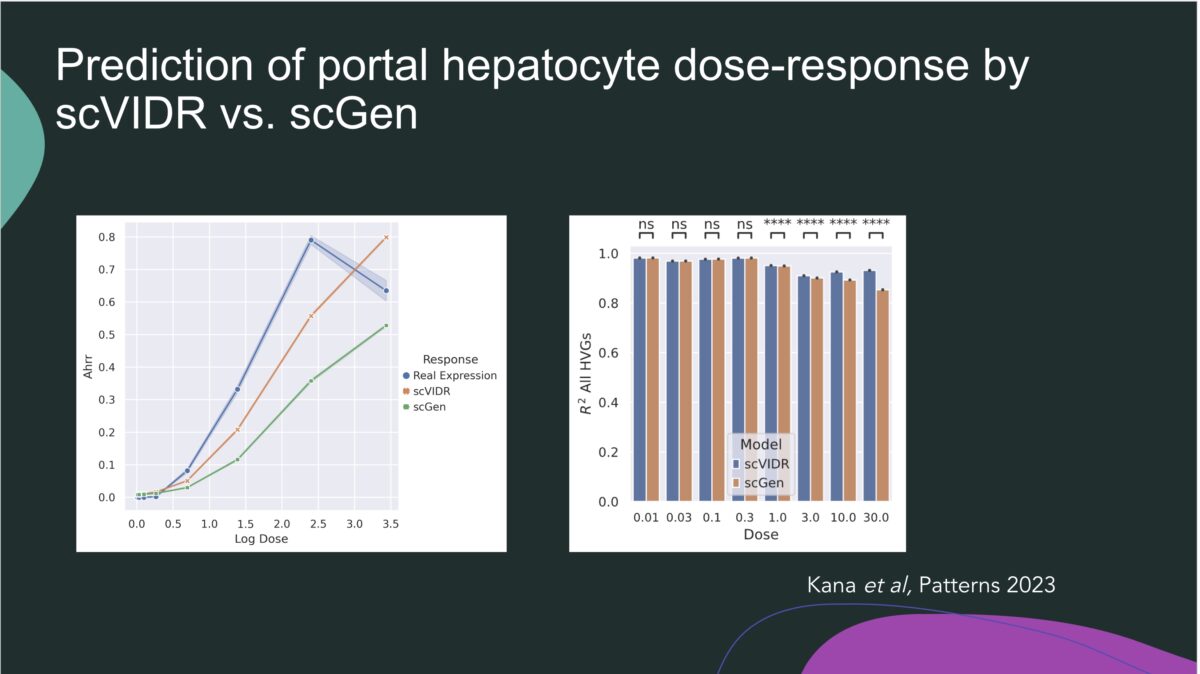
prediction of portal hepatocyte does response by scVIDR vs scGEN

Deep Generative Learning of Single Cell Gene Expression to Predict Dose-Dependant Chemical Pertubations

Amanda HoldanNews, Webinars

 Our webinar speaker is Sudin Battacharya, PhD, Associate Professor in the Departments of Biomedical Engineering and Pharmacology & Toxicology at Michigan State University. Dr. Battacharya’s research sits at the crossroads of computation and biology, where he uses quantitative tools to study how signaling and transcriptional networks control cell fate and how environmental pollutants can disrupt these processes. In this talk, …
ScitoVation Announces Strategic Focus on Computational Toxicology: Laboratory Operations to Conclude March 31, 2025

Amanda HoldanNews, Press Release

February 18, 2025 – Durham, North Carolina: ScitoVation, a pioneer in New Approach Methodologies (NAMs), today announced a strategic decision to fully focus on advancing software  tools and computational services to help clients assess the safety of compounds (in silico). By directing attention to its core strengths, ScitoVation aims to bolster its competitive edge and deliver even greater value to the …

Using the PBK Model to Predict Risk Metrics: MOIE, MOS

Systems PBK/PD Modeling of 4-Hydroxyphenylpyruvate Dioxygenase Inhibition

Amanda HoldanNews, Webinars

 Our webinar on PBPK Modeling features speakers Dr. Steven Webb and Dr. David Cowie from Syngenta. Together, they will share models to assess how Tyrosine aminotransferase (TAT) catalyzes the conversion of tyrosine to accumulation of hydroxyphenylpyruvic acid (HPPA) and how its activity varies among mammalian species. Species differences also exist in the ability to utilize alternative pathways for tyrosine catabolism …