Pharma
Determine Safety Early and Efficiently
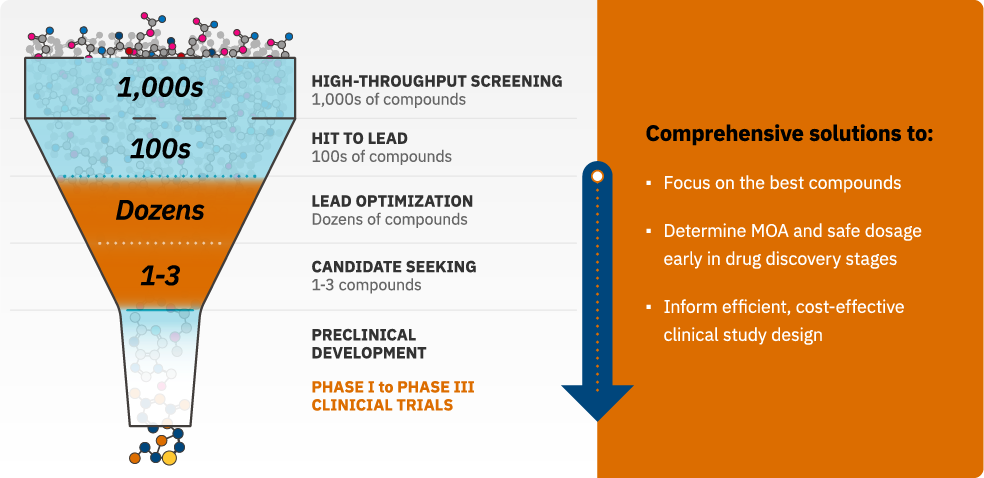
ScitoVation assists pharma clients in the drug-hunting discovery stage to efficiently identify lead compounds by characterizing their efficacy and safety, determining and understanding mechanism of action (MOA), and predicting the likely human-equivalent dose.This saves time and cost, and supports defensible go/no-go decisions earlier in development. One of our newest offerings is helping clients assess the genotoxicity or mutagenicity of their test compounds. One of our newest offerings is helping clients assess the genotoxicity or mutagenicity of their test compounds.
Predicting Human-Equivalent Dose
For clinical testing, data from in vitro and animal studies coupled with PBPK modeling provides precise estimates of human equivalent dose for dosing regimens in early trials. With our PBPK tools, we help clients:
For clinical testing, data from in vitro and animal studies, combined with PBPK modeling, provides precise estimates of human-equivalent dose for early-trial dosing regimens. Our PBPK tools help clients:
- Screen a large library of compounds for safety, narrowing candidates before committing to further testing.
- Determine dose ranges for in vitro and animal studies based on compound structure.
- Predict drug-drug interactions (DDI), the most common PBPK application in regulatory submissions, used to flag interaction risk before clinical testing.
- Characterize variability across special populations, including obese, elderly, pediatric, or disease-affected patients.
- Model dose-effect relationships to define the range between drug efficacy and safety, supporting go/no-go decisions and prioritization.
- Establish safety margins, the dose difference between the intended therapeutic effect and severe or life-threatening side effects.
Learn more about our in vitro-to-in vivo extrapolation (IVIVE) methodology →
Client Success Stories
Case Study: Understanding the mode of action of lead candidates for a compound targeting cancer
Case Study: Example of an in vitro assay followed by extrapolation to human for estrogenic compounds
Request an Early Safety Assessment
Talk to a Scientist
Services
Information Synthesis
Dosimetry (PBPK)
Transcriptomics / MOA
Integrated Safety Assessments
Recurring Scientific Support
Industries
Chemical Manufacturers and Consumer Products
Pharma
Industry Associations
Applications
Human Equivalent Doses and Exposure
Transcriptomics
NAMs Strategies for Prioritization and Product Stewardship